
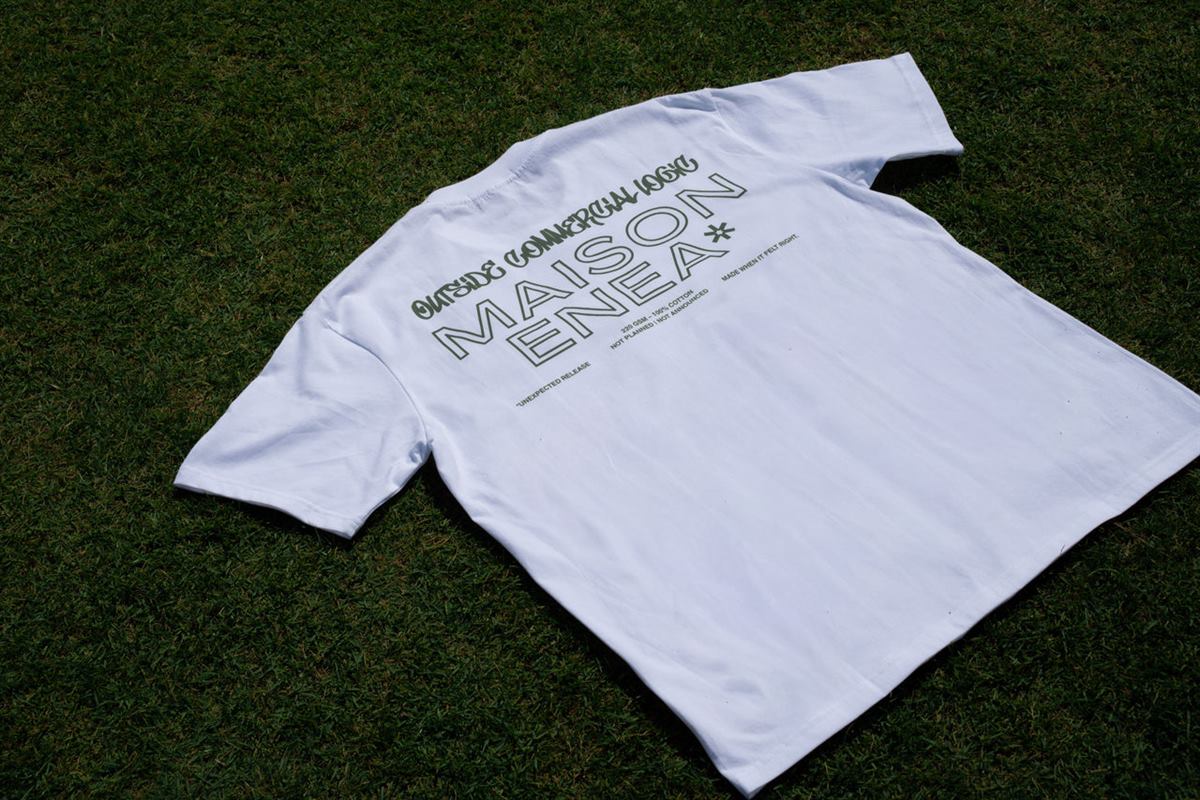
Maison Enea.
A brand selling out its drops — while the product page quietly argued against the sale.
The client.
Maison Enea is a limited-drop clothing brand run by its two founders, Andre and Ale. Made-to-order, no restocks — when a piece sells out, it moves to the archive and stays there. Nine releases in, six had sold through. A 67% sell-through rate on limited drops is not a demand problem.
The brand itself was already working: disciplined monochrome aesthetic, product copy with an actual voice, and a philosophy page that reads like a person wrote it — because one did.
The problem.
Their single best trust signal — free 30-day returns, return shipping covered — was buried in footer policy pages. Meanwhile the product page said "no returns to this chapter." The exact moment a customer decides whether to trust a made-to-order purchase, the site was contradicting itself.
The size guide existed, but it was hidden inside the product photo gallery where nobody flips far enough to find it. And sold-out archive pages — full of pieces people wanted — captured none of that demand. No email, no waitlist, nothing.
What I did.
- A full independent brand audit — positioning, copy, and a page-by-page conversion walkthrough of the store, delivered as a clickable web report, not a PDF that dies in a downloads folder.
- Named what's working, on the record. The "one piece at a time" positioning, the archive-as-heritage framing, the voice — so the founders know what not to touch.
- Found the money already on the table. The returns contradiction, the buried size guide, the silent sold-out pages, a naming convention that drifted between releases.
- Ranked every fix by effort. The whole quick-win list — returns line under the Add to Cart button, size-guide link next to the size selector, email capture on the archive, review app with seed reviews — costs 30 to 60 minutes each. No rebuild, no replatform.
The result.
Delivered June 2026 — the fix list is in the founders' hands, sequenced so the highest-trust fixes land first. Honest framing: this audit is fresh, so there are no after-numbers to show off yet. What the audit established is the before: real demand (six of nine drops sold through), real trust assets (a genuinely generous return policy), and a handful of under-an-hour fixes standing between the two.
This is what a consult looks like at Kayo: I don't hand over a strategy deck and wish you luck. I hand over a ranked list of specific fixes, with the reasoning attached, that you could start on the same afternoon.
"Their best trust signal — free 30-day returns, shipping covered — was buried in the footer while the product page said the opposite. Six of nine releases had sold through. The demand was never the problem; the page was."
Deliverables.
- Independent brand audit (clickable web report)
- Page-by-page conversion walkthrough
- Ranked quick-win fix list (each fix 30–60 min)
- Trust-signal repair plan (returns + size guide)
- Archive email-capture plan
- Naming-convention cleanup
Want eyes like this on your business?
One audit, a ranked fix list, no strategy-deck fluff. I reply within a day — usually a few hours.